

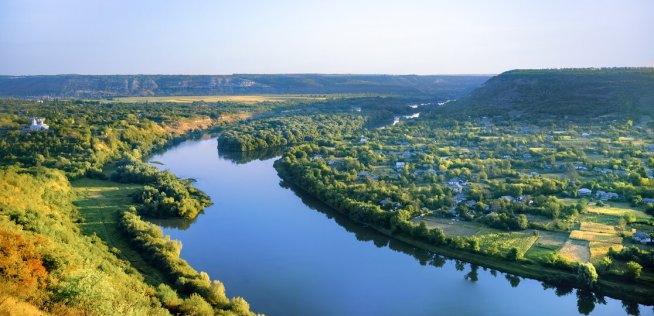
Journey along the Volga: a route through ancient cities and great stories
The length of the Volga River is 3,530 kilometers. It is the longest river in Europe. It flows through 15 regions of Russia — from the Tver region to the Caspian Sea. On its shores there are large and small settlements with a rich history, ancient architecture and picturesque landscapes. We have compiled a route through seven Volga cities: what to see, where to stay and what to be inspired by on the road.
Why it's worth taking a trip along the Volga
The Volga is more than just a river. Trade routes passed through here, settlements were built, crafts were born and cultural ties between the regions developed.
The idea of such a trip combines all the best that you can get from traveling.
- Contrasts. Large cities on the Volga River with theaters, museums and embankments are adjacent to quiet villages and small villages, where much remains the same as it was decades ago.
- Identity. This is not a tourist attraction or a showcase. Here you can see a simple, real Russia: wooden houses, markets, old streets where life goes on as usual.
- Views and atmosphere. The Volga landscapes are a good reason to choose this route: the expanse of the river, temples on high banks, old marinas, green slopes, morning mists.
- Comfort on the way. The big cities have a well-developed tourist infrastructure and modern hotels.
- The saturation of impressions. You can see a lot in a short time: the sights of the Volga region, nature, architecture, and taste the local cuisine.

Detailed route: key cities and their features
Uglich
An ancient city on the Volga, just a year younger than Moscow. It was here that Tsarevich Dimitri died under mysterious circumstances in 1591, an event that marked the beginning of the Time of Troubles.
In Uglich, it is worth walking around the Kremlin: the walls have not been preserved, but the princely chambers and the church of Tsarevich Dimitri on Blood, a monument of the XVIII century, have survived. The main views open from the embankment: the Volga makes a smooth bend — the very "prince" who gave the name to the city.
Visit the Museum of Hydraulic Engineering, one of the best in the region. His exhibitions are dedicated to water, dams and Russian engineering. You can look into the engine room of the hydroelectric power plant and even start the Amazon river on an interactive stand.
And on the way out of town, it's worth picking up cheese at the store at the Uglich factory. It's been made here since 1935. It has an expressive taste with a slight spice.
Myshkin
If you started the route in Uglich, then the next stop is Myshkin, a small but expressive historical city of Russia on the banks of the Volga. A legend is connected with its name: Prince Fyodor Mstislavsky was sleeping on the shore when a mouse ran over his face and woke him up — right before a snake crawled up to him. So the little animal saved the prince's life, and an entire city was named after the rodent. Today, there is a monument to this mouse in the center.
Myshkin is famous for its museum complex. It consists of:
- The Mouse Museum has more than 2,000 exhibits dedicated to mice in world culture, including books, toys and art objects.
- The Russian Felt Boots Museum is an exhibition about traditional felt shoes.
- Part of the complex is the Pyotr Smirnov Museum, the Museum of Wooden Architecture and several other locations combined into a single folk museum.
Everything is within walking distance. On the embankment, you can find shops with local cheeses and souvenirs, and turning off the tourist streets, you can find yourself among wooden houses with lace trim.
The next city, Yaroslavl, is about two hours away from here. After quiet Myshkin, it will seem almost a megalopolis.
Yaroslavl
The city of the Golden Ring on the Volga, one of the oldest and largest on the route. Founded in the 11th century, it has long been an important trade and cultural center. The historical part of the city is included in the UNESCO list, and the embankment is considered one of the most beautiful on the river.
Main points of the route:
- Church of Elijah the Prophet with unique frescoes;
- Spaso-Preobrazhensky Monastery and Yaroslavl Museum-Reserve;
- The Volkovsky Theater is the oldest drama theater in Russia;
- The museum "Music and Time" with a collection of clocks, gramophones and bells.
The city stands out for its scale and rich cultural life. This is a good stopover point: it's easy to combine excursions, walks and an evening at the theater.
For a comfortable overnight stay, you can choose the ibis Yaroslavl Center, located right in the center, next to the embankment, restaurants and cultural sites.

Kostroma
One of the most beautiful cities on the Volga — with wooden houses, merchant facades and impressive views.
The main attraction is the Ipatievsky Monastery, where the history of the Romanov dynasty began. From the monastery it is convenient to walk to Kostromskaya Sloboda, an open-air museum of wooden architecture. There are about 30 buildings of the XVII–XIX centuries: houses, baths, mills, churches.
The Romanov Museum, the Museum of Fire Fighting (in an old tower), the Museum of the History of the region, as well as an art gallery are located in the city center.
Nizhny Novgorod
After Kostroma, in 4-5 hours by car you will get to Nizhny Novgorod, one of the largest cities where you can relax on the Volga River in the summer. It is easy to combine walks, excursions and relaxation by the water here — the city is located at the confluence of two rivers.
From the height of the embankment there is a view of the Oka, the Volga and the city panorama. Main points of the route:
- Nizhny Novgorod Kremlin is a stone fortress of the XVI century, the center of urban history.
- The Chkalovskaya Staircase is a monumental descent of 560 steps connecting Verkhne- and Nizhne-Volzhskaya embankments, overlooking Strelka and the city of Bor.
- The cable car over the water between Nizhny Novgorod and Bor is the longest in Europe.
- Bolshaya Pokrovskaya and Rozhdestvenskaya streets are pedestrian zones of the 19th century, with cafes, shops and the atmosphere of the old town.
In summer, boat trips and boat trips are popular.
For an overnight stay, it is convenient to choose Mercure Nizhny Novgorod Center. The hotel is located near the Kremlin and the main streets, offers comfortable service, a fitness room and a restaurant.
Cheboksary
Then our way lies to the capital of Chuvashia and one of the most comfortable cities on the route. Cheboksary stretches along both banks of the Volga River, and the city's embankment is one of the most well—maintained and long.
What to see:
- Chuvash National Museum — founded in 1921, the largest museum in the republic with extensive ethnographic and historical collections.
- Cheboksary Bay (or Cheboksary Bay) is a popular recreation area with a pedestrian promenade, cafes and points for boats and catamarans in summer.
- The Trinity Monastery is an ancient monastery of the XVI century, one of the oldest in the Volga region.
- The Beer Museum has been in existence since the late 1990s and tells about the brewing traditions in the region.
- Cheboksary Drama Theater is for fans of the cultural program.
In summer, you can especially feel how the Volga River, tourism and everyday life intertwine and form a single space for recreation: locals and visitors to the city walk along the bay, ride boats and enjoy Chuvash cuisine in restaurants.
The ibis Cheboksary Center is a modern hotel with a restaurant, free Wi-Fi and a gym.

Samara
One of the largest cities in the Volga region and the logical conclusion of the route. It combines Volga views, beaches, Art Nouveau, Stalinist history and local gastronomic traditions.
Among the sights of the cities on the Volga, the Samara embankment stands out especially — one of the longest in Europe, with beaches, fountains and walking routes.
What else to see:
- Stalin's Bunker is a 37-meter-deep underground shelter built in 1943 and declassified only in the 1990s. There are guided tours here now.
- Te-Klodt's house is a turreted tower that looks like an illustration from a fairy tale.
- The elephant house is a rare example of Viennese Art Nouveau in Russia, decorated with sculptures of elephants.
- Kuibyshev Square is the largest in Europe, the center of urban life.
- Zhiguli Brewery — founded in the 19th century, here you can learn about brewing and taste local varieties.
You can spend the night at ibis Samara, a modern Accor hotel near the beach. The hotel has 204 rooms (including Premium ones with views of the Volga River), 74 UrbanFood restaurant, parking and Wi-Fi.


The main modes of transport for travel
It is convenient to travel along the Volga in various ways — from a comfortable cruise to an active kayaking trip. It all depends on how much time you have and which format is closer.
Car
is the best option for independent travelers. It is convenient to drive the entire route along the federal highway M‑7 and regional roads. You can stay in small towns, explore the surroundings and move at your own pace.
River cruise
Classics of tourism on the Volga. The ship is traveling along a route with stops in cities, and there is everything you need for recreation on board. You can choose a short route for 2-3 days or a two-week cruise. It is also suitable for families with children.
Boat, yacht, catamaran, kayak
It's an unusual format, but it will give someone the most impressions. You can rent a boat or yacht on the route section. Or go part of the way on the water by kayak — if you have experience and equipment.
Train
A convenient way to move between individual cities — Yaroslavl, Nizhny Novgorod, Cheboksary, Samara. However, the railway does not cover the entire route directly, so the train is more often used as part of a combined journey.
Combined version
Is the optimal way to go all the way. You can get from Moscow by train to Yaroslavl, and then rent a car or join part of the cruise.
Practical tips for travelers
Plan ahead
In summer, popular destinations on the Volga River are quickly booked. It is better to check the schedule of the ships in advance, book a cruise or choose hotels.
Consider the distances
There can be 200-400 km between cities. Even when traveling by car, it's worth calculating your strength: don't try to cover everything in three days.
Dress according to the weather
Even in summer, it can be windy and cool on the water, especially in the morning and evening. Warm clothes and a windbreaker will come in handy.
Try the local
Each city has its own gastronomic peculiarities: cheese in Uglich, beer in Samara, Chuvash cuisine in Cheboksary. This is also part of the route.
Use offline maps
Communication on the highways may be lost. Download the maps in advance.

Conclusion
Traveling along the Volga is when you seem to be in Russia, which you know well, but still you are surprised every day. There are cities with different atmospheres on the banks of the great river, and the route is made up of impressions that remain for a long time.
Choose your route, your rhythm, your stops. And may the road give you the feeling you should have traveled for.

