

Natural attractions of Krasnodar and the region
Krasnodar and its surroundings are rich in natural attractions. We will introduce you to the most interesting of them in this article. Find out which locations are worth visiting to enjoy the beauty and grandeur of nature.
Which natural attractions of Krasnodar are worth visiting
Gorky Park with the Wishing Tree
This park is one of the main attractions of the city. Its second name is "City Garden". The history of the park dates back to 1846.
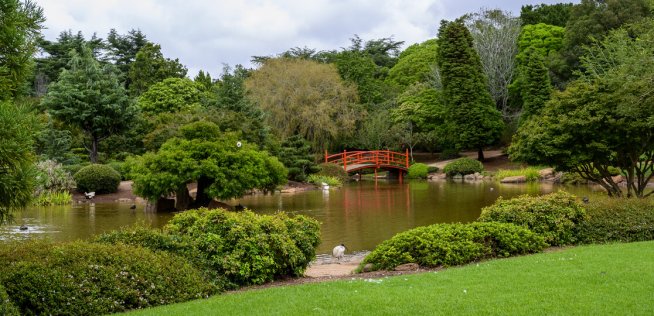
This is a real oasis where people come for relaxation, inspiration and fresh air, as well as to feed the ducks. Here you can stroll along the picturesque alleys, sit on benches in the shade of trees or enjoy the view of the pond surrounded by greenery.
According to local beliefs, a powerful tree grows in the park, which helps the dream come true. It is not difficult to recognize it among its fellows — it is very winding and golden.
If you write a cherished wish, and then throw a piece of paper into a hollow, it will definitely come true. But it must be done so that no one sees you. Besides, you can't tell anyone what kind of dream you wrote about.
There are also many interesting things in the park for vacationers of any age.: attractions, a lake with swans, playgrounds, cafes, restaurants, and areas for sports activities. You can also often see performances by musicians and theater groups here.
Galitsky Park
This is the unofficial name of Krasnodar Park, where nature peacefully coexists with urban infrastructure. The park was opened in 2017 and has become an important part of the cultural life of the city.
The green zone is located in the center of Krasnodar, near the Kuban stadium, and covers an area of about 60 hectares. It is a good place for outdoor walks, sports and family holidays. There are beautiful lakes, alleys with trees, open spaces for active games and picnic areas. There is a cafe and restaurant on site, as well as a summer amphitheater.
One of the main features of the park is its landscape diversity. Both native species of trees and plants, as well as exotic species, grow on the territory. In addition, the park is divided into several themed areas: from botanical gardens to skate parks and playgrounds.
There are also several art objects in the park, as well as walking paths that smoothly transition from one zone to another. In the evening, decorative lights are installed here, making the park even more picturesque.
In addition to nature, Galitsky Park often hosts various cultural events, exhibitions and concerts.

I.S. Kosenko Botanical Garden
This natural monument of Krasnodar was founded in 1959 on the basis of Kuban State University. Initially, it was a small green space where Professor Kosenko and his colleagues planted trees and shrubs. The plants in the garden came from hundreds of botanical gardens of the USSR. The purpose of the arboretum was not only to replenish the local flora with new species, but also to create a place for students of agricultural faculties to practice, as well as conduct scientific experiments.
The garden quickly became an important element of the scientific life of the city and turned into an unofficial gem. One of the first unique objects was an artificial pond with lotuses, which attracted the attention of visitors. In 1981, the Botanical Garden was declared a specially protected natural area, and in 2007 a large-scale reconstruction was carried out. The updates included the installation of lighting in the most remote corners of the garden, paved paths, new benches and urns.
After the renovation, the garden has become even more comfortable and attractive to visitors. Two monuments were added to its territory: one in honor of the victims of the tsunami in Japan, and the second in memory of the tragedy that occurred in Krymsk during the flood.
Today, the Botanical Garden is not only a green recreation area, but also a real arboretum. Here you can see birch groves, meadows strewn with dandelions, pink alleys of magnolias, flower beds with tulips and tall trees. The garden area makes you feel like you are in a forest, especially in its far corners, where peace and quiet reign. Local peacocks, although rarely seen, can sometimes be seen in the warmer months.
For those who prefer activity in the park, there are descents and ascents that young cyclists have come to love. They often ride here, practicing and filming stunts on camera.

The Kuban River and the Kuban Embankment
The length of the Kuban River is 880 km. It passes through the territory of Adygea, the Karachay-Cherkess Republic and Stavropol. But most of her journey (662 km) runs through the Krasnodar Territory.
The Kuban originates at the foot of Mount Elbrus. Until the twentieth century, the river flowed into the Black Sea, and today it ends its journey in the Sea of Azov. There are dozens of villages and towns along it. At the same time, in each locality the river is called in its own way: Kyoban, Guban, Hypanis.
The Krasnodar Reservoir, the largest artificial reservoir in the Southern Federal District, is located on the river. About 106 species of fish, waterfowl and muskrats live in the Kuban.
You can enjoy the views of the river by walking along the Kuban embankment. It is a popular place for walks among townspeople and tourists. Along the way, you can see historical buildings and monuments, and if desired, visit cafes and restaurants.
Chistyakovskaya grove
Another popular and favorite vacation spot among Krasnodar residents, which has been around for over a hundred years. This space, also known as Pervomaisky Park, is equally suitable for romantic walks and noisy mass events. The park attracts not only locals, but also tourists, due to its unique atmosphere and a variety of recreational opportunities.
Chistyakovskaya grove will appeal to those who want to enjoy the silence among the tall trees, play sports or just feed the squirrels. You can also spend time in one of the entertainment areas. The park is decorated in a traditional Russian style, which makes it especially attractive for lovers of cultural and natural monuments.
One of the "features" of the park is the "Wedding Alley", a popular place for newlyweds to take photos. That's why Chistyakovskaya Grove is considered the second most popular place for wedding photo shoots (after Sunny Island Park), and wedding motorcades can often be seen in this corner of Krasnodar.
The park has gained a new lease of life after installing three illuminated fountains, improving lawns and creating a greenhouse for growing flowers. This green space always looks bright and lively, especially in the warmer months, when its territory is filled with greenery and flowers.
The Chistyakovskaya grove covers an area of 36 hectares and offers a huge amount of entertainment for all ages:
- cafe;
- ice cream stands;
- stores;
- bike and scooter rental;
- bag chair rental.
For those who prefer active recreation, there are outdoor exercise equipment, a volleyball court and chess tables.
Among the most famous objects of the Chistyakovskaya grove, it is worth noting the book market, which has existed here since 1995. This place has become a real cultural center where everyone can buy or exchange books. Sellers offer a wide range of literature, as well as stationery. This market becomes especially popular in August, when school preparation begins.
For families with children, Chistyakovskaya Grove offers a modern children's playground, which covers 8 hectares. There are attractions for every taste, among which stands out "Khutorok" — a ride in a trailer that takes you back to the past and demonstrates the Cossack way of life. The park also has a "Rope Park" offering several routes of varying difficulty to test physical fitness and agility.
In the summer, an open-air cinema opens in Chistyakovskaya Grove, where both classic films and new films are shown. Sessions are held several times a week, and lectures and workshops are organized on the site during the day.

Interesting natural sights of Krasnodar Krai
Dolmens
Stone dolmens are considered to be the same age as the Egyptian pyramids. They also served as tombs in the distant past. Outwardly, the structures resemble large boxes, but they weigh a couple of tons each. They are made of limestone and quartz sand.
Once there were thousands of dolmens in the Caucasus, but only 150 have survived to this day. Although they are found all over the world, the earliest dolmens were built on the western coast of the Black Sea. It is still unknown who exactly built them, but there are many theories and legends about this.
Each dolmen of the Krasnodar Territory is unique in its size and shape, and no two of them are the same. However, their main purpose is similar: archaeologists believe that most dolmens were used as tombs, which is confirmed by the burials found inside. These structures also had a cult significance, as evidenced by their impressive size and astronomical orientation. Another interesting fact is that many dolmens were built in places with high energy activity.
What do dolmens look like? They usually have the shape of a truncated pyramid consisting of five large stone slabs. The thickness of the slabs reaches 30 cm, four of them serve as walls, and the fifth as a lid. There is often a round hole in one of the walls with a diameter of 35-45 cm, through which you can get inside, and the hole is closed with a special sleeve. Although pyramidal dolmens are most common, there are other shapes such as rectangular, trough-shaped, round, and horseshoe-shaped.
Sometimes temples were built around the dolmens — places for ritual sacrifices. However, not all dolmens were related to burials. Some of them were used for defense: in case of an attack on the settlement, women and children hid in the dolmens, while men sealed the entrance and went to defend themselves. It was almost impossible to reach those who had taken refuge.
There are many dolmens in the Krasnodar Territory. They look intimidating, but their mysterious energy attracts tourists and locals. Each of them often returns to the dolmens to make a wish.
Bigius Waterfalls
This is one of the natural wonders of the Krasnodar Territory, attracting tourists with its scenic beauty and accessibility. The waterfalls are only 6 km from the main M4 highway, which makes them a great place for a short trip to nature. To get to the waterfalls, you only need to walk about 1 km along a forest path.
One of the reasons for the popularity of these waterfalls is their convenient location and spectacular views. Water cascades fall from a 15-meter height, creating an impressive sight. On sunny days, when the rays of light break through the water spray, you can see a bright rainbow, which only adds to the magic of this place. Special attention should be paid to the grotto with a small waterfall — this is a favorite place for visitors to relax.
The Bigius cascade consists of 6 waterfalls, each of which has its own unique beauty and features. The largest of them are the waterfalls "Shoelace", "Devil's Mouth" and "Grotto". These names attract attention and become a topic of discussion among travelers. Each waterfall, in turn, has its own characteristics, from small but very beautiful cascades to powerful streams that create noise and fog in the air.
The length of the hiking trail is approximately 5 kilometers, and along the way you will discover not only the waterfalls themselves, but also picturesque views of the surrounding forest and mountain rivers. This is a great place for those who want to experience the freshness of the mountain air and be surrounded by unspoilt nature.


Lake Abrau
One of the amazingly beautiful natural sites of the Krasnodar Territory. The lake is located in a mountain bowl at an altitude of 84 m above sea level. The picturesque pond is surrounded by unique nature with relict forests. The lake looks especially impressive in calm weather, when its surface turns into a mirror reflecting clouds and majestic mountains.
Lake Abrau stretches for more than 3,000 meters in length and reaches a width of 630 meters. In ancient times, its depth was up to 30 meters, but today it does not exceed 10 meters. The Durso River flows into the lake, as well as several mountain streams, but not a single river flows out.
Several local legends are associated with the lake, which attract not only tourists, but also connoisseurs of history and mythology. One of these legends tells about a rich village, whose population was proud of its wealth and was going to lay out a road to the seashore made of precious metals. However, the gods, seeing the pride of the people, punished them: the village went underground, and instead a lake appeared, which became a symbol of punishment for arrogance.
According to another version, the tragic story concerns a shepherd named Durso, who was in love with the daughter of a rich Abrau landowner. The girl's parents rejected his love, arguing that it would be better for their village to disappear than to allow an unequal marriage. As in the first legend, the village disappeared, and a lake appeared in its place.
Kiselyov Rock
This is one of the most picturesque natural attractions of Kuban, and it is also a place that attracts travelers with its history, myths and cultural heritage. Located in the Tuapse region, it rises 46 m above the sea and belongs to the Kadosh protected forest park area. The rock formation occupies only 1 hectare of the 300 hectares of the entire park, but its unique nature and panoramic sea views make it a center of attraction for travelers.
The rock was named after the artist A.A. Kiselyov, who lived in a country house in these places and devoted a lot of time transferring the beauty of local landscapes to canvases. Kiselyov was one of the famous representatives of Russian imperial painting, and his paintings, such as Descent to the Sea and The Outskirts of Tuapse, captured not only the rock itself, but also the surrounding landscapes, which forever entered the cultural heritage of Russia.
Kiselyov Rock is located in an ecologically clean area, where rare species of coniferous trees such as Pitsunda pine and Crimean pine grow, as well as lianas and orchids.
It was at this rock that one of the episodes of the film "The Diamond Hand" was filmed — a fishing scene on the so-called "Black Stones".

Where to stay
If you are planning to relax in the city or visit the sights near Krasnodar, we recommend booking a room in one of the cozy Accor hotels. We have loyal prices and a high level of service. For example, you can choose ibis Krasnodar Center, a three-star hotel with an ultra-modern design. It is located in the very center of the city, close to the main attractions.

